

1.2026 Northern Japan Cherry Blossom Forecast: Your Second Chance Is Here
Right now, as you are reading this article, an extraordinary scene is unfolding across Northern Japan. The cherry blossoms in Tokyo — those fleeting pink floral seas that once drew millions of visitors to Ueno Park and Shinjuku Gyoen — have reached full bloom and begun to fade. Petals are falling, crowds are dispersing, and another Instagram-viral cherry blossom season is quietly coming to an end in southern Japan.
Yet most travelers do not know, or have never prepared for this: the peak travel season is far from over.
In the remote north, across the rugged, windswept Tohoku region and the vast island of Hokkaido, the cherry blossom front is slowly advancing northward. This wave of pink blooms swept through Kyushu in late March, graced Tokyo afterward, dyed the mountains of Nagano pink in early April, and now it is drifting calmly and leisurely toward the far north.
2026 Northern Japan Cherry Blossom Forecast Overview
Sendai, Miyagi: Full bloom around April 11. Peak period: April 5 – April 12.
Hirosaki, Aomori: Cherry blossom festival peak from April 19 to April 27. The site features 2,600 cherry trees across 52 varieties.
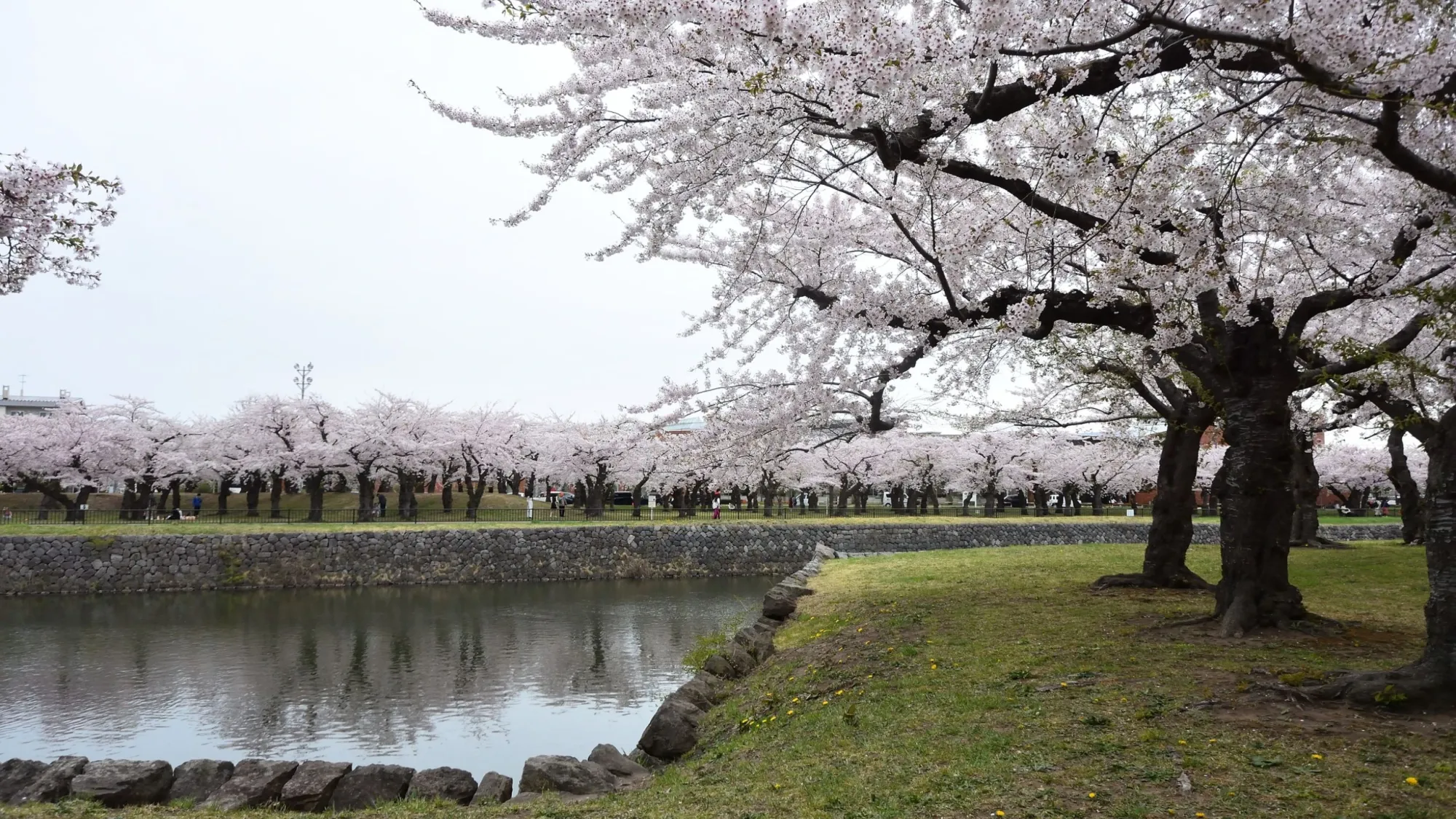
Goryokaku, Hakodate (Hokkaido): Blossom season from April 24 to May 1.
Sapporo, Hokkaido: Full bloom expected around April 28. Peak period: April 25 – May 4.
Asahikawa, Hokkaido: Late April to early May. 3,500 cherry trees will be illuminated for night light shows.
Kushiro, Hokkaido: The final cherry blossom bloom of Japan in 2026, approximately from May 2 to May 8.
The Pink Wave: Follow the Cherry Blossom Front Northward
Tokyo (March 27) → Kanazawa (April 1) → Sendai (April 5) → Hirosaki (April 17) → Hakodate (April 23) → Sapporo (April 25) → Kushiro (around May 5)
This is the magic of the cherry blossom front: a slow floral wave traveling north across 2,500 kilometers of Japan’s archipelago over roughly six weeks. By the time it reaches Kushiro, the rest of the country has already turned fully green.
II. The Final Bloom Itinerary: April – May 2026
The charm of a northern cherry blossom journey lies in how it rewards patience. There is no need to rush your schedule, fight for viewing spots, or book six months in advance only to find every ryokan within a 40-kilometer radius fully occupied. This itinerary follows the northern bloom route, allowing you to travel naturally between destinations: as the blossoms fade in one city, they are just about to reach full bloom in the next.
April 2 – April 9: Sendai, Tohoku Region
West Park, Hakkaizaka Park, and night illuminations along the Hirose River.
April 9 – April 16: Kakunodate & Kitakami, Tohoku Region
Weeping cherry trees along the samurai district and a 2-kilometer cherry blossom tunnel by the riverside.
April 17 – April 27: Hirosaki, Aomori Prefecture, Tohoku
Hirosaki Castle Festival, widely regarded as Japan’s most spectacular cherry blossom celebration.
April 23 – May 1: Hakodate, Hokkaido
The star-shaped ramparts of Goryokaku and the panoramic observation tower overlooking the pink-hued moat.
April 25 – May 4: Sapporo, Hokkaido
Maruyama Park, Moerenuma Park, and Hokkaido Shrine.
Late April – Early May: Furano & Asahikawa, Hokkaido
Scenic mountain basin views and a park with 3,500 cherry trees illuminated beautifully after dark.
Around May 2 to May 8: Kushiro, Hokkaido.
This marks Japan's final cherry blossom bloom of 2026, symbolizing the end of the entire sakura season.
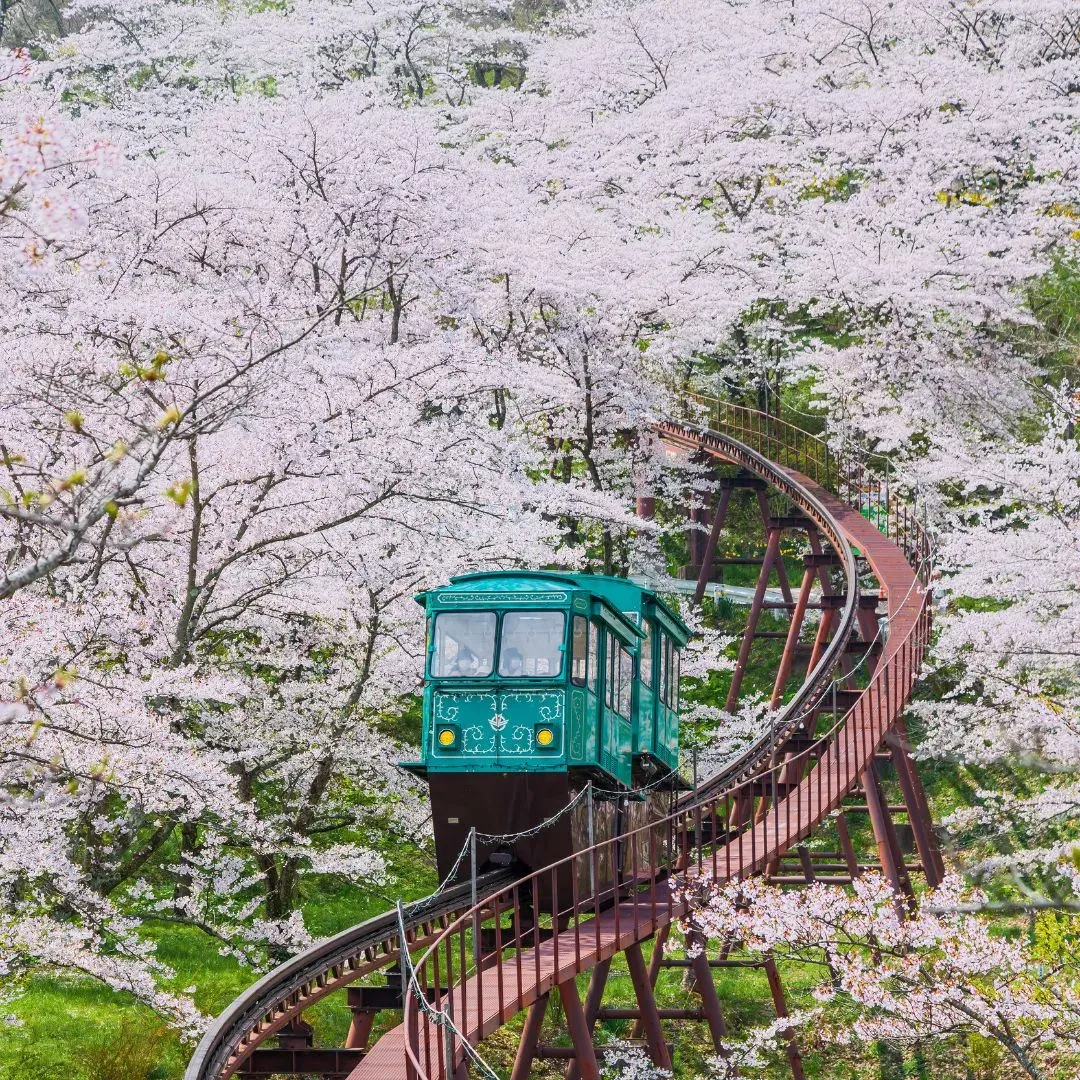
Hirosaki: Japan's Most Magnificent Cherry Blossom Festival
Best Viewing Period: April 19 – April 27 · Hirosaki Cherry Blossom Festival
If you can only stop at one destination on your entire journey, make it Hirosaki. Hirosaki Castle Park in Aomori Prefecture features what many cherry blossom lovers privately regard as the most stunning sakura scenery in all of Japan — a bold claim in a country that cherishes cherry blossoms deeply, yet one you will hardly deny after seeing it in person.
The park covers 49 hectares on the former site of a castle, home to around 2,600 cherry trees across 52 varieties. Lush, famous weeping cherry branches drape over the stone walls and moat, like soft pink curtains falling toward the water surface. When petals begin to fall, they often tint the entire moat pink, floating and swirling along the gentle current to form the breathtaking natural phenomenon known to Japanese people as Hana-ikada (flower rafts).
Behind this stunning scenery stands Mount Iwate, the sacred mountain of Aomori. Its snow-capped peak forms a cinematic backdrop so beautiful it almost feels artificial. The ancient feudal castle architecture, blooming cherry trees, petal-filled streams, and the towering silhouette of the mountain combine to create one of Asia’s most gorgeous blends of nature and cultural heritage.
The 2026 Hirosaki Cherry Blossom Festival will run approximately from April 19 to 27. After nightfall, light illuminations inside the castle turn the whole area into a fairyland atmosphere. It is recommended to book accommodation early, preferably hotels located in central Hirosaki, so you can walk easily to the park entrance.
The Hana-ikada stage, when fallen petals gather and float thickly across the moat surface, usually occurs during the final two to three days of the festival. Many visitors believe this petal-falling scenery is even more beautiful than the full-bloom peak itself.
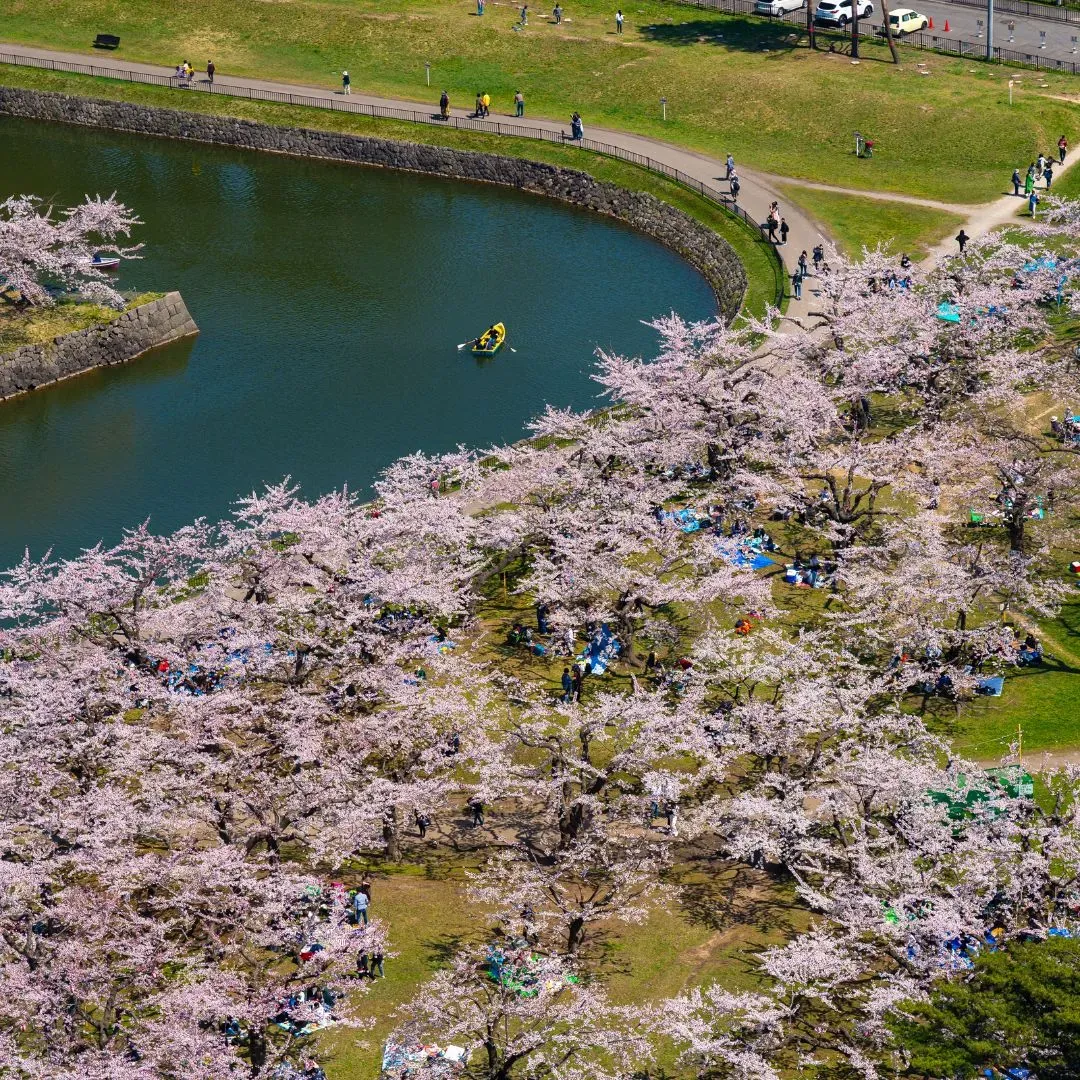
Around May 2 to May 8, 2026: Japan’s Final Cherry Blossoms
In a country where cherry blossom viewing is a nationwide ritual followed by meteorologists, travel apps, and millions of visitors every year, every season must have its final curtain call. In 2026, that closing scene will unfold in Kushiro, a coastal city on the wild eastern shore of Hokkaido.
In early May, when the last petals fall here, Japan’s cherry blossom season will officially come to an end. Witnessing this final bloom in Kushiro is a rare experience: a seasonal journey stretching over 2,500 kilometers gently concludes within just a few magnificent days along the Pacific coast.
You can combine your itinerary with the stunning Kushiro Shitsugen Wetland — Japan’s largest wetland and a UNESCO Ramsar site — as well as the rugged coastal scenery of Kushiro–Shiretoko National Park. Early in the morning, you may spot red-crowned cranes among the reeds. Kushiro is one of the few places on Earth where you can admire endangered wildlife amid ancient natural landscapes. Afterwards, you can return to town and quietly enjoy the very last cherry blossoms of the year in Japan.
Being in Kushiro at this moment brings a calm and profound atmosphere. There are no crowded masses or social media crowds — only trees, cranes, the crisp cold wind from the Pacific Ocean, and the final soft pink petals of the season.
III. Traveling the North: Why Seamless Connectivity Is Non-Negotiable
There is a reason most travelers never venture beyond Tokyo for cherry blossom viewing: transportation in Tohoku and Hokkaido is undeniably more complex. This is not a downside, but part of their unique charm — yet it does require thorough preparation in advance.
It all hinges on one thing: a reliable, high-speed internet connection.
In rural areas of the Tohoku region and the vast, sparsely populated inland parts of Hokkaido, station Wi-Fi is either unavailable or extremely unstable. Across Japan, public Wi-Fi generally works poorly outside major city centers. If you need to check whether the 3:15 PM bus to Goryokaku is still running during holiday periods, do not count on getting a signal at rural bus stops in Aomori or quiet platforms in eastern Hokkaido.
Network issues unique to Hokkaido become especially prominent here. Many rural cherry blossom parks, including Kitakami Tenmangu and smaller attractions in Aomori Prefecture, do not offer station Wi-Fi. You need mobile data to check bus routes while staying inside the parks. Inland areas of Hokkaido, such as Furano, Kushiro and the entire eastern corridor, also have very limited public Wi-Fi infrastructure. Train stations in small towns usually provide no Wi-Fi access at all.
Google Maps offline mode works for basic city navigation, but it cannot update real‑time transport delays. You must stay connected with mobile data to track live train and bus schedules. Traditional Japanese physical SIM cards often require a local address for registration. Pre-ordered eSIMs skip this step entirely — you only need to activate them before your return flight.
Translation apps like Google Lens are essential for reading platform signs and restaurant menus in quiet northern towns, and they require an active data connection to function properly. Cherry blossom forecast apps, including the widely popular Sakura Navi 2026, also rely on mobile data to deliver real-time bloom updates on location.
The solution is simple, affordable, and should be your first booking right after landing: get your Japan eSIM from flowgoesim. Stable performance, secure connection, and reliable customer support guaranteed.
Stay Connected Across Japan with flowgoesim
flowgoesim's Japan eSIM plans are tailor-made for this kind of journey. They deliver fast and flexible mobile data that can be activated right after landing, with full coverage across the whole of Japan — including rural Tohoku and remote areas of Hokkaido. There is no need to swap physical SIM cards or hunt for vending machines at the airport.
With flowgoesim plans starting at just $0.6 per GB, it is one of the most cost-effective ways to stay online during your weeks-long trip through northern Japan. Install the eSIM on your phone before departure, and activate it immediately upon arrival at Narita Airport or New Chitose Airport in Sapporo.
With the flowgoesim Japan eSIM, you can confidently make every train transfer, instantly translate signs at rural stations, keep track of real-time cherry blossom forecasts, and check bus schedules at remote park entrances — no more struggling to find available Wi-Fi passwords.
Key Features Overview
Install before your flight and activate instantly upon arrival in Japan. No airport queuing, no SIM card counters, and no registration forms to fill out.
It provides nationwide coverage across Japan, including full data service throughout rural routes and small towns in Tohoku and Hokkaido where public Wi-Fi is unavailable.
Plans start at just $3.99 per GB, with unlimited data options and flexible durations for every trip — perfect for a 10-day cherry blossom tour or a full month exploring all across Japan.
No physical SIM card required; compatible with all eSIM-supported smartphones. Works with iPhone XS and newer models, plus most flagship Android devices released from 2019 onwards.
If you are planning an in-depth cherry blossom journey across northern Japan, the flowgoesim Japan eSIM is more than just convenience — it is the most practical travel essential you can bring along.
V. The Last Petals
Every year, Japan’s cherry blossoms stage an extraordinary geographical wonder: over two months, a wave of pink blooms travels north across 2,500 kilometers of the archipelago, chasing the warming air like a slow, gentle floral tide.
In Tohoku and Hokkaido, this tide is now at its peak — or yet to arrive. The crowds have faded away, the parks fall into quiet serenity, and snow-capped mountains stand softly in the distance. The petals are real and fleeting, waiting for travelers who choose to linger while everyone else’s attention remains fixed on Tokyo.
Pack your bags. Activate your flowgoesim Japan eSIM before boarding your flight. Follow the cherry blossom front northward.
The grand final chapter is brief, yet magnificently beautiful — reserved for everyone who comes to witness it.